
Urban development

Urban planning and urban development are key to the biggest challenges in the municipality.

Otherwise, there will be no change in transport, we will not be able to counter the climate crisis, we will not be able to maintain or strengthen social cohesion or reduce land consumption.

Whether health, a good quality of life and residence, affordable housing, social cohesion, a strong business location: We can only achieve all this with a reasonable, human-scale and public-interest-oriented, comprehensively thought-out and planned urban development. Area is not multipliable. It is therefore necessary to first use areas within the existing buildings before they are developed outdoors (internal development before external development). Reuse of existing buildings takes precedence over demolition, buildings must be degradable in the future and building materials must be reusable.
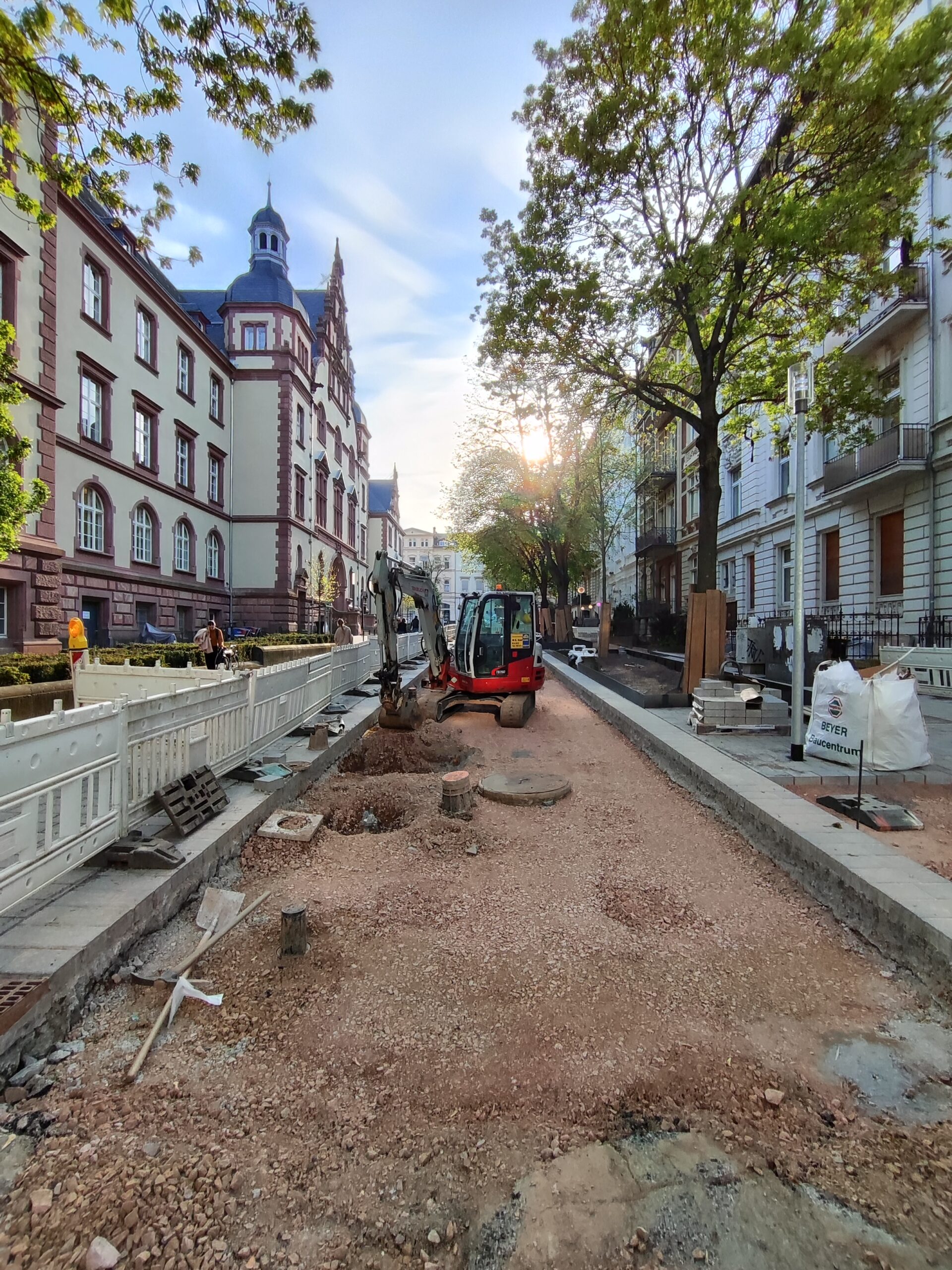

What a sustainable urban development oriented towards the common good means for us

Climate-adapted city

Heat protection and heavy rain events are part of urban planning in existing and new districts. In the climate crisis, areas should therefore fulfil several functions in the future: Water can be absorbed and let seep in the rain, offer leisure time and quality of stay and serve as access routes. A suitable planting provides shade and contributes to cooling in the district.

Worth living city

In a sustainable city, public space is being redefined and aligned with the needs of residents – with new forms of housing, more greenery, short distances and high resistance to heat.

Productive city

The new land use plan envisages land for the establishment of businesses. Their development is carried out according to clear concepts, instead of distributing them indiscriminately over the area as before. Existing commercial areas will also be revised accordingly.

Socially and environmentally friendly city

Inexpensive housing in the Rhine-Main area is what we want to achieve through municipal land stockpiling and guidelines for a share of subsidized housing in new construction projects. Here, ecological requirements are essential when building. The Wiesbadener Wohnungsbaugesellschaft GWW has a pioneering role here.

What we want to do specifically in this area

We want to shape the city in such a way that it can withstand the consequences of the climate crisis and at the same time become more livable. The already decided "Rules of the game for the sustainable development of neighbourhoods" This is the basis and will be CLIMATE_PLAN further specified. They include measures for more shading, additional green areas through multiple use of land, unsealing in the stock, water in the district and sustainable mobility concepts.

Buildings of the city and its shareholdings are to be built according to the guiding principles and associated guidelines of sustainable construction – with low energy consumption and heating systems without fossil fuels. This reduces greenhouse gas emissions and reduces costs in the long term.

Wherever possible, we want to ensure that surfaces are unsealed. Especially in densely built-up districts such as the Westend, Rheingauviertel and Biebrich-Mitte, more green is to be created again.

In order to limit the area sealing in our highly compacted region, it is necessary to make more systematic use of compaction options than before.

A better data basis, the consistent application of innovations in building law (e.g. in roof construction), but also the willingness to innovative solutions help. So we want the city of Wiesbaden to actively address the possibilities of a superstructure of supermarkets and parking lots and to get into conversation with owners.

The areas of the BKA and the state police that will be freed up in the future offer a special potential for internal development. We want to help shape future use through B-Plan changes. Therefore, these should only be possible in the sense of our building land resolution, if the city is at least part owner of the area. For the areas of the BKA that are federally owned, the city has a first access right. In order to take advantage of this on favourable terms, an urban framework plan must be in place. We are pushing for this and are also making sure that the active land policy is adequately equipped with financial resources. Only then is urban development possible on the terms of our municipality.

We want the city to plan new neighborhoods according to the principle of short distances. Every new district needs a transport and mobility concept. It will include quarter garages, parcel stations, car sharing and bicycle storage facilities.

We are committed to safe, quiet residential areas without through traffic, for example with one-way streets or through traffic barriers, such as in Adolfsallee.

Roads should be designed in such a way that cars can travel more slowly and everyone, whether on foot, by bicycle or in the car, can travel safely. Children should come to school safely and suitable roads should be used as playgrounds and places to stay in the summer. In the historic pentagon, we want fewer cars and more quality of life.

We want to design new commercial areas in such a way that they are sustainable and climate-adapted. To this end, appropriate criteria must already be defined for the development plans. Our goal is to keep land use as low as possible and to avoid large, fully sealed areas, such as parking spaces, or at least to provide for secondary use by PV systems.

Clear rules and procedures are developed for the new development and refurbishment of existing commercial premises, which are based on the existing "Rules of the game for the sustainable development of neighbourhoods" orientate. In particular, the focus is on sustainable mobility, the careful use of space, an efficient and sustainable energy supply as well as sustainable solutions for deliveries and the parking of trucks.

We want to create housing for all income groups in the population. In particular, the focus is on subsidised housing. Building needs to become cheaper – a precondition for this is affordable land. Therefore, we will continue to ensure that strategic soil stockpiling by the state capital Wiesbaden takes place. In this way, we prevent investors from building exclusively high-priced apartments. The Wiesbaden Social Land Use Directive requires investors to provide 30 per cent of subsidised housing, as well as the construction of social infrastructure such as day-care centres and schools.

For residential areas, we adhere to the target of a minimum density of 80 residential units per hectare. For rural areas not exceeding 2 hectares, a minimum density of 50 housing units per hectare shall apply. Deviations in favour of predominantly commercial uses on the ground floor should remain possible.

With concept awards, the city of Wiesbaden is already promoting the expansion of diverse forms of housing, such as community housing projects, building cooperatives or building communities. We want to continue this expansion. Through serial and modular construction, the city can also achieve faster results in implementation.

In particular, for cycling, the 1. Ring in front of the main station a dangerous obstacle. By building a high road for cycling, we create more safety and comfort for all traffic participants and a landmark at the city entrance. As a result of the bridge, cyclists no longer have to cross the busy intersection at the station and can drive away from cars and pedestrians to the station or from the station to the city.

The careful handling of our building culture in the form of monuments and buildings that are listed contributes to the quality of life. Here, our testimonies of the past must be preserved and protected from damage caused by vacancy and/or environmental influences. Sites of particular importance are the Valhalla, the Sleeper's Head or the Hofgut Klarenthal. Private owners of listed buildings will also be able to use renewable energies (e.g. PV systems).

What we have already achieved

We Greens have made a significant contribution to ensuring that sustainable neighbourhood development is not just a goal, but a lived practice. The rules of the game for sustainable neighbourhood development form the binding guidelines for this. The planning is based on five thematic areas: ‘Living city’, ‘Climate-optimised urban green’, ‘Sensitive water management’, ‘Renewable energy’ and ‘New mobility’. Concrete measures are assigned to these topics. With the implementation of these guidelines and measures, the district development in Wiesbaden is designed to be sustainable and future-proof.

We Greens have established clear guidelines for sustainable building in Wiesbaden. In the future, municipal buildings must be built in accordance with the BNB guidelines (Assessment System for Sustainable Building), which take ecological, social and economic criteria into account in equal measure. Economic efficiency here means that the construction project will continue to be economical in the future and not only in the short term.

A central concern is the conversion of existing buildings instead of demolition: Through renovation, energy-efficient modernization and flexible redesign, existing buildings can be preserved and at the same time adapted to current requirements. This saves resources and protects the climate – and shows how responsible urban development succeeds with regard to the environment, costs and the common good. Demolition is the worst of all options. Because when a building is demolished, all the energy that has already flowed into its production – from the production of the materials to the construction itself – is lost. In a new building, this energy must then be applied again. This costs many additional raw materials and significantly worsens the climate balance.

In Wiesbaden, we took concrete steps to better arm the city against heavy rain and heat waves, including the Green Department and Mayor responsible for the environment. These include the unsealing of surfaces, the greening of roofs and facades, permeable coverings, the redesign of public squares as well as the installation of ridges and retention systems for targeted rainwater infiltration.

A central project is the redesign of Alsace Square, which will in future serve as a green city park with temporary rain retention and thus buffer heavy rain events. In addition, the city has set up support programs for green roofs and facade greening to store rainwater on site, improve air quality and reduce urban heat.

We Greens have actively promoted the multi-coding of areas in Wiesbaden and have thus achieved an important step for sustainable urban development. This concept ensures that areas fulfil several functions at the same time – be it as green spaces, in street spaces, on parking spaces, sports and school areas or in water management use. The aim is to bring together the interests of different actors, to use land efficiently and at the same time to meet social, ecological and climatic requirements.

Wiesbaden is to become climate-neutral by 2045 and this requires specific requirements. The CLIMATE_PLAN was adopted for this purpose. The KLIMA_PLAN covers the fields of action: Energy, mobility, climate-friendly/sustainable urban and district development and urban network. For each field of action, it sets out concrete measures to prevent greenhouse gases – from the energy-efficient renovation of schools to the electrification of bus transport.

We Greens have driven forward the redesign of squares in the city center: Sedanplatz has already been completed, the Alsatian Square, Schlossplatz and Bülowplatz are in the process of being completed. The places are to be restored to what they once were: Meeting points for the people from the neighbourhood and green ‘lungs’ for the neighbourhood. Their redesign also contributes to climate adaptation, reduces heating in the district and at the same time increases leisure time and quality of life. In districts that heat up particularly strongly, we will continue to work to unseal and redesign areas in the future.

With the new building land decision, we are bringing together and coordinating the numerous decisions taken in the past on the subject of building land development – such as social land use, concept allocations, heritable building law, subsidised housing and climate-friendly settlement development – in a common guideline. As a result, we achieve planning security and an orientation of urban development towards clear goals. The building land resolution is a win for a sustainable and socially just development of Wiesbaden, with a focus on building land provision, climate protection and affordable housing.

With the building land resolution, we are creating a clear framework for politics and administration as to how new building land will be developed in Wiesbaden in the future. In the future: New building areas for residential construction are only shown if at least 50 percent are owned by the city or transferred to it. In addition, where urban planning makes sense or is possible, a minimum density of 80 residential units per hectare should apply.

Only in this way can the consequences of the overheated real estate market in the Rhine-Main metropolitan area be limited and controlled and affordable housing for all income groups be created. Only in this way can socially acceptable and climate-friendly urban development take place.

We GRÜNE have launched the ground management concept of the city of Wiesbaden. Wiesbaden thus pursues the goal of preserving soils in their quality and function as an indispensable livelihood and securing their functions for future generations. In the medium term, consistent soil management results in net-zero consumption.
This means: No additional surfaces may be permanently sealed. In return, if new buildings or roads are created, an already built-up area must be resealed elsewhere and returned to natural or green areas. After reaching net 0, we will enter a land-use circular economy.

The concept is based on the Stuttgart Model (BOKS) and is based on existing data on soil quality and quantity in urban areas. This optimises land management and protects valuable soils from sealing.

We Greens have significantly advanced an active soil policy in Wiesbaden. It is a strategic tool for acquiring, managing and distributing land in a targeted manner. Soil is a scarce, non-reproducible raw material that cannot be considered a pure commodity. Land policy must be planned actively and in the long term in order to implement the common good-oriented goals of the municipality.

In doing so, we are taking a path that cities such as Ulm, Münster and Hamburg have been successfully following for decades.

Early acquisition of potential development areas by municipalities for urban, residential and open spaces is the foundation of urban development, serves as a service of general interest for citizens and allows municipalities to increase their influence on the local housing market. The municipality can decide to whom it surrenders real estate or land. This is the only way to avoid speculation with land by third parties and to achieve the construction of affordable housing. The municipality can decide whether housing is developed, social infrastructure is created in the form of daycare centers or schools, or whether environmental and climate protection is promoted, for example. An active soil policy thus strengthens the municipal capacity to act.