
Sustainable infrastructure and heat transition

Climate protection begins on the ground. It is the municipalities that must shape the heat transition, the transport transition and climate adaptation in concrete terms – with resilient projects, clear decisions and a reliable strategy for the coming decades.

At the same time, pipe fractures and sewer damage show that the infrastructure dividend from the Gründerzeit and post-war years has been used up. The refurbishment congestion does not allow for any further delay. So the reason we have so many construction sites today is because we used to have too few.

It is the great task of our generation to make Wiesbaden's canals, pipes, pipes and roads fit for the changed requirements of the 21st century.

We started with this: with the KLIMA_PLAN, the municipal heating plan and strategic infrastructure planning. We want to continue on this path with determination – for a city that will continue to function tomorrow.

What Sustainable Infrastructure and Heat Transition Means for Us

Making Wiesbaden fit for the future

We are bringing Wiesbaden’s infrastructure into the 21st century – with a focus on climate protection, digital connectivity, renewable energies, the electrification of transport and heat, climate protection and climate adaptation.

Drive energy and heat transition

In particular, municipal climate protection means supplying all buildings in our city with energy and heat from renewable sources. We will consistently push ahead with the necessary renewal and expansion of the network infrastructure.

Keeping the city running

Construction measures in a large city are also so demanding and lengthy because the city cannot simply be paralyzed until completion. The accessibility of apartments, the supply of shops and of course the water and energy supply as well as the sewage disposal must be ensured permanently.

Exploiting synergies

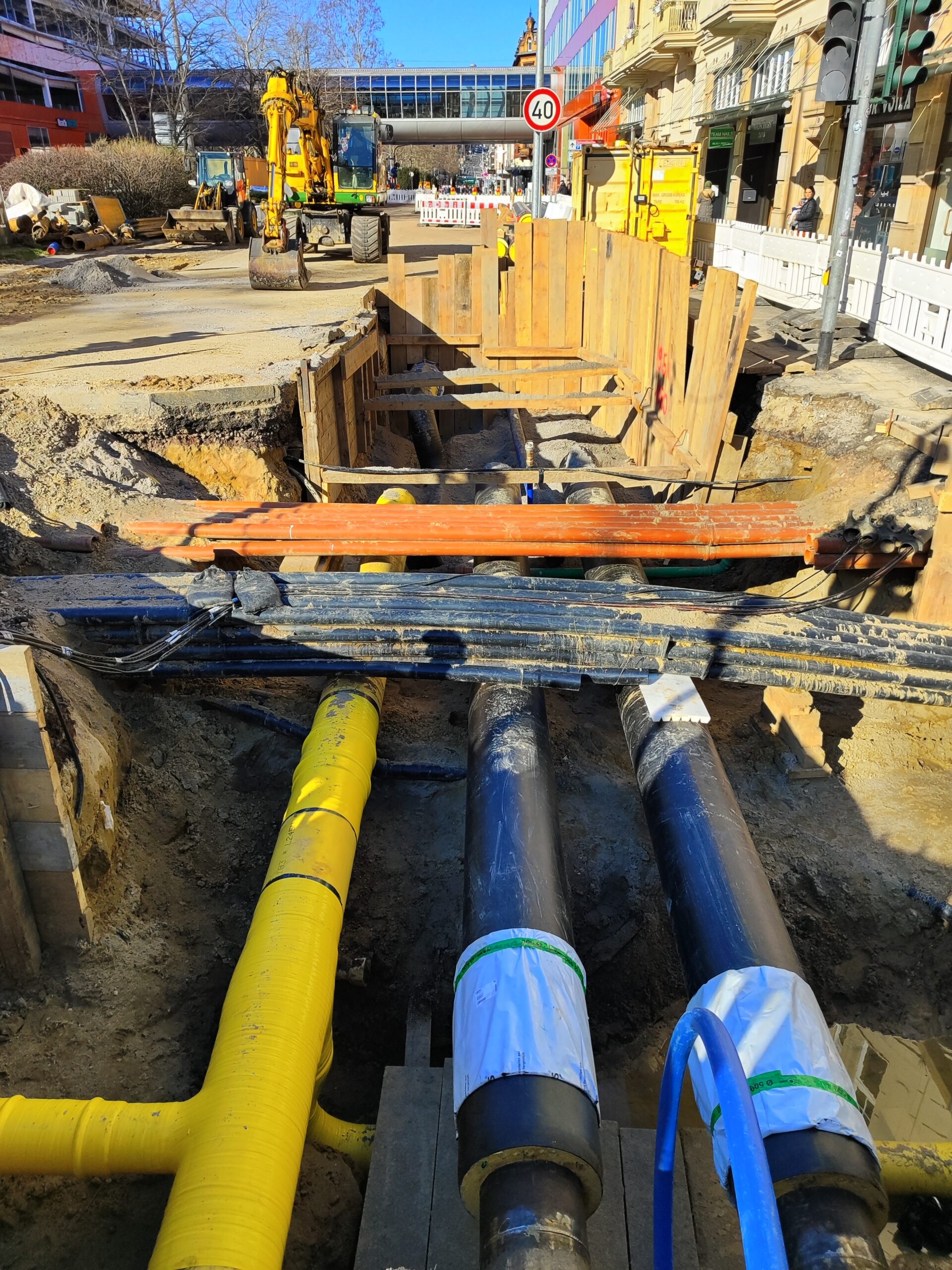
In order to be able to cope with and finance the abundance of tasks, we want to dovetail them as well as necessary. Once the road is torn open, the entire infrastructure under it should be renovated and the road space adapted to the requirements of the 21st century.

Making measures transparent

Clear information about the purpose, goal and course of construction measures reduce anger. More transparency strengthens acceptance and understanding among citizens. Here we want the city of Wiesbaden to communicate even more actively.

Making the transport system more resilient

Disturbances are all the stronger the denser the car traffic is. On foot or by bike you usually get through better, especially at many construction sites. We are driving the traffic turnaround, advocating for safe site guidance for pedestrian and bicycle traffic, making the system more robust and resilient.

What we want to do specifically in this area

The adoption of the municipal heating plan in 2026 at the latest is the starting signal for a comprehensive renovation of the heat supply in our city. We want to tackle this huge task consistently and support citizens, companies and utilities in driving the transformation efficiently and purposefully.

To this end, we are committed to setting up a joint advice centre between the city and network operators that provides low-threshold and practical information – for example on how buildings can be heated in a sustainable and climate-friendly way. At the same time, we are driving the heat transition in urban properties: Schools, kindergartens and public authorities should be provided with climate-neutral care as soon as possible.

Thus, the infrastructure refurbishment is accompanied not only technically, but also communicatively – as the basis for a reliable, socially just and climate-friendly heat supply in Wiesbaden.

In addition to the renovation of the existing infrastructure, the transformation of the grids in the course of the heat transition is the major task of the next decade. Particularly in the historic city centre, the development of district heating in entire districts will entail considerable construction measures. We therefore consider it useful to use these construction measures as clocks for the rest of the modernisation – under (channels, pipes, pipes), on (roadway and sidewalks) and over (planting, trees, charging infrastructure) the road.

The expansion of our power grids is crucial for the success of the energy transition. Both for the drive turnaround in the transport sector as well as for the heat transition in the apartments and for the reliability of the supply, new lines and power lines are absolutely necessary. We want the city to realize these in the greatest possible harmony with nature. The decision on where and how (overhead line or underground cabling) these paths are to be built should be made in particular on the basis of ecological criteria. Priority should be given to using and optimising existing route corridors and avoiding interference with sensitive ecosystems through intelligent route management. The areas required for this (such as new substations) are intended to provide a permanent secondary benefit as colourful, species-rich flowering meadows. We want transparent procedures with early involvement of all those affected.

Unfortunately, the construction sites associated with infrastructure modernization are associated with significant traffic disruptions, which are all the more drastic the more car traffic is in the city. The more people manage their journeys without cars, the better the traffic, so it is essential to ensure the flow, safety and reliability of bus, bicycle and foot traffic, even during construction work.

The annoyance often associated with construction sites is also due to a lack of information about the purpose, purpose and duration of the construction work. We will ensure that the public is informed at all major construction sites on site about who works there, why and by when. For this purpose, there should be standardized signs with the most important information.

The online construction site map should be integrated into the Digital Twin and enable the most up-to-date status of the current construction sites as well as a preview of the upcoming measures.

Construction sites are annoying. In order to keep impairments as low as possible, careful coordination of all construction measures is required. They are to be coordinated and planned in such a way that traffic flows are preserved and costs are reduced. Through intelligent planning, we reduce the burden on residents, the environment and the economy as well as the impact on the quality of life in our city, while still ensuring rapid and effective progress of the measures.

Wiesbaden introduced the digital twin in 2025 – a key tool to make infrastructure planning and urban development more efficient, transparent and sustainable. By linking current data on transport, energy, water, climate and construction projects, the effects of heavy rain events, heat islands and flood risks can be identified at an early stage. Among other things, measures for climate adaptation, flood protection or city logistics can be planned and implemented in a targeted manner.

We GRÜNE want to consistently further expand the digital twin in order to make Wiesbaden a pioneer city for networked, climate-resilient and sustainable infrastructure.

What we have already achieved

Wiesbaden started heat planning at an early stage in order to determine how all buildings can be supplied with heat in a sustainable and climate-friendly manner in the future. In cooperation with the German Environment Agency (Umweltamt) and ESWE, the heat demand was analyzed in a house-specific manner, potential heat sources were identified and initial proposals for supply areas were developed. The results can be viewed by everyone in the Digital Twin.

When the supply areas are defined in 2026 and the heating plan is adopted, there is planning certainty for the network operators and all property owners. That's what we're committed to. With a transparent and forward-looking process, we are setting the course for the conversion of our supply infrastructure in the next two decades.

We have seized the opportunity and combine the ongoing district heating expansion and the renovation of the underground networks with a fundamental redesign of Schwalbacher Straße.

The wide motorway-like traffic axis that separates Westend and the city centre is finally becoming permeable and lively. The public space will be redistributed, crossings for pedestrians will be improved, walkways will be widened, trees will be planted, green spaces will be created, seating will be set up and opportunities for outdoor dining will be created. What has been demanded since the demolition of the high bridge, we are now implementing: An asphalt desert becomes a sustainable urban space, an attractive boulevard that connects instead of separates.

A fully electrified quarter garage for Westend was built on Alsace Square, with 429 parking spaces with its own electric charging station, including eight fast-charging stations. It creates public charging infrastructure where private wallboxes are difficult to install. This makes electromobility accessible to tenants and residents of the adjacent residential area without their own parking space. Bike parking, bus connection and good footpath access make the paths easier. Smart occupancy management with license plate recognition ensures efficient use. The project strengthens the drive turnaround in Germany's most densely populated district and shows how to combine modern infrastructure and climate-friendly mobility.