
Agriculture and forestry

Agriculture and forestry are much more than just economic sectors – they are the basis of our food, our landscapes and our climate. Whether in the city or in the countryside: The way we farm has a direct impact on our quality of life, our health and our environment.

We face the challenge of designing a sustainable agriculture that is environmentally sustainable and economically viable and whose products can be afforded by any household.

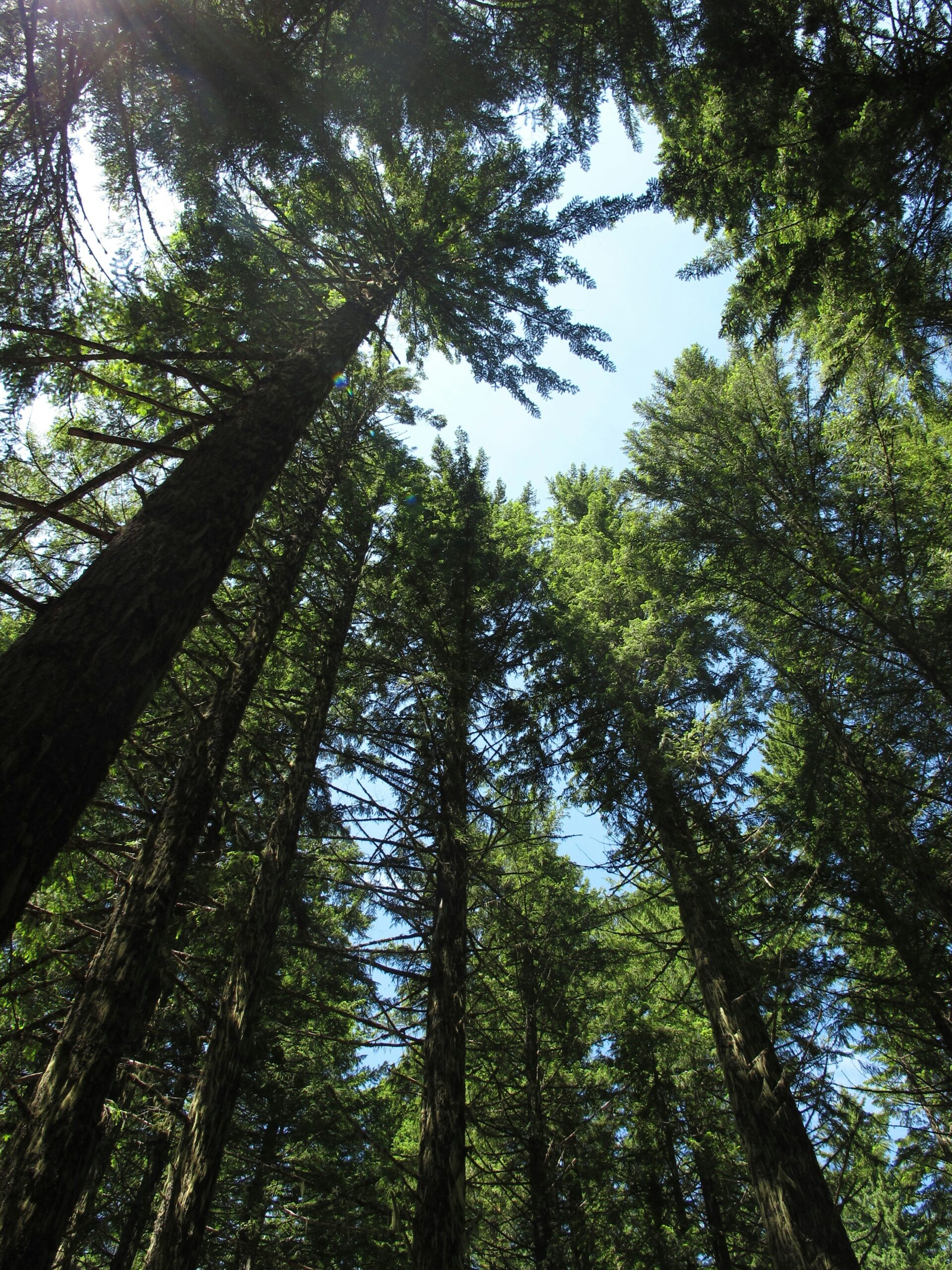
Forests have been the engines of major material cycles for millions of years. We put their ecological function at the heart of our forest development strategy, because climate-resilient mixed forests are the guarantors of clean drinking water, clean air, the preservation of biodiversity and a cooler city in hot summers.

What sustainable agriculture and forestry means to us

Nature conservation by farmers

We stand for a policy that works together with farmers to protect our nature. They have in-depth knowledge of the importance of healthy soils, clean water and biodiversity – foundations on which both their work as farmers depends existentially and our entire ecosystem.

Promoting healthy soils

Our soils are the basis for almost everything that lands on our plates and are indispensable for the preservation of biodiversity. We support management that guarantees long-term vitality.

Thinking forest and game together

An intact forest lives on balance. For us, it is crucial that politicians pay equal attention to the protection of wildlife and the health of our forests, working closely with hunters.

Strengthening regional, healthy diets

It is important to us that healthy food is produced in our region at affordable prices. Good food is the basis for an active and enjoyable life – for us, our children and grandchildren. It's for everyone, not as a privilege of a few.

Commitment to more animal welfare

Industrial factory farming causes animal suffering, pollutes water and climate and can endanger our health. We are committed to species-appropriate, regional animal husbandry.

Preserving cultural landscapes

The small-scale structures of our agricultural areas hold an incredible treasure trove of biodiversity and cultural heritage. They reflect a careful use of our natural resources.

What we want to do specifically in this area

Forests are one of our most important carbon storage systems, providing fresh air, species protection, groundwater renewal and recreation – and, last but not least, providing raw materials. Our urban forest – with the famous ‘Greek Chapel’ and the Opelbad – is one of Wiesbaden’s landmarks, a source of our quality of life and is therefore particularly close to our hearts. We want competing uses to be solved constructively and the forest to be further developed close to nature in order to strengthen resilience to rising temperatures, droughts, heavy rains and storms. This is the only way to maintain the cooling effect for the city centre. We want to work to strengthen and make visible environmentally friendly wooden backing with horses in the city forest. In this way, the city of Wiesbaden can conserve the valuable forest soil, reduce the consumption of fossil fuels and become a model for forest care that is close to nature all year round.

Agriculture needs healthy crops. We want to strengthen soil protection and regenerative management so that our ecosystems are preserved. They are the basis for our regional food production and make an important contribution to climate protection and biodiversity. A future land policy must combine environmental, social and economic aspects. The loss of fertile soil through development and sealing is irreversible and therefore not to be tolerated. We want the city of Wiesbaden to stop the additional sealing of dirt roads. Where possible and where there are no conflicts of use (e.g. with cycle paths), field paths should instead be resealed – as some domestic wildlife rely on open soils, for example as a source of building materials. In order to raise awareness of the value of vital soils, we want the city of Wiesbaden to make urban areas available for community gardens and permaculture projects.

Our farmers are the most important partners for the preservation of our natural livelihoods and the safeguarding of our nutrition. We want an agriculture that is ecologically compatible, economically viable and affordable for all. To achieve this, cultivation must be resilient to climate change and extreme weather events. The conversion to organic farming is just as much an investment in the future as the introduction of digital agriculture. We want the city of Wiesbaden to actively support the farmers in these steps in order to stop further court heirs.

Wiesbaden's agriculture is a pillar of our food security. Global crises show the importance of independent and resilient food production. At the same time, it reduces the energy expenditure for transport to the consumer. To this end, we want the city of Wiesbaden to build up a local infrastructure and promote regional marketing. This includes the promotion of weekly markets, especially in the suburbs. We support the concept of short distances and novel food production, such as vertical agriculture and aquaponics.

We are committed to farming methods that do not require synthetic plant protection products and thus protect soils, water bodies, our health and the entire local flora and fauna. Where this is not yet possible, we want fertiliser- and pesticide-free waterfront zones on streams and waters to be established and enlarged in order to reduce pollutant inputs. To protect biodiversity, we want the city of Wiesbaden to promote awareness of the importance of flowering strips and hedgerows. In the future, we want landscape management to be increasingly secured as an additional source of income for farmers.

Stray orchards and vineyards cultivated close to nature not only characterize our cultural landscape, but are also indispensable habitats for numerous animals and plants, they are among the most species-rich habitats in Central Europe. Around Wiesbaden there is still a gratifyingly large stock of old orchards, whose protection status we want to secure permanently by the city of Wiesbaden. We support their care and strengthen local marketing so that scattered fruit products can again be appreciated and farming can be worthwhile.

With fruit tree sponsorships, care campaigns and harvesting projects, we want to raise awareness of the value of these habitats and activate civil society engagement. We want the city to support community commitment and promote orchard sponsorships in which, for example, inner-city residents take care of the orchard together with the people from the suburbs.

With the Mechtildshausen domain, the city of Wiesbaden has a flagship organic farming and craftsmanship business that includes farm shops, gastronomy and horse stables. It is part of the Wiesbadener Jugendwerkstatt (WJW), which trains socially disadvantaged young people and adults and provides a wide range of further educational opportunities. We are committed to preserving WJW – including the Mechtildshausen domain – in this form.

In addition, we want to experiment with site-adapted plantings and improve the transfer of knowledge between research and agricultural practice. That is why we are committed to setting up places of learning for innovative agriculture, where practical experience is passed on.

Our forests are not just clusters of trees, they are the lungs of our planet and treasuries of biodiversity.

We are committed to an information and media program that teaches children and young people in particular the importance of the forest as a digital offering. We want to strengthen the cooperation of the municipal foresters with schools, daycare centres and environmental associations. This includes forest tours, project days and environmental education offers. Through forms of dialogue between the city of Wiesbaden and the population directly in the city forest, we want to involve the people of Wiesbaden in the strategies of ecological forest management and use their knowledge in the context of citizen science projects.

The city forest is an indispensable part of our homeland and a recreation area that is freely available to all citizens. We want to establish accessibility with public transport from the city centre and at the same time protect sensitive areas from disruptions. Barrier-free paths, forest playgrounds and recreational opportunities should allow all people to experience nature in a relaxed way. We want the city to make sure that forest walks do not lead through the area of the sensitive wild cat. Hunters are important contributors to forest design. We are committed to ensuring that hunting is increasingly oriented towards ecological criteria and enables natural forest regeneration. Wiesbaden has therefore introduced an ecological hunting concept that supports forest conversion and at the same time ensures animal welfare-friendly hunting methods. Only if all forest users work together can we preserve our forests for the future. We are committed to continuing the certifications according to FSC and Naturland.

We promote the concerns of the Wiesbaden animal shelter and support the Cyperus Park, the Kastel animal park and the pheasantry. We support the education about the responsible handling of newly immigrated animal species. In the city center, we are committed to a species-appropriate and scientifically supported handling of, for example, the pigeon and Nilgans populations.

What we have already achieved

The Wiesbaden city forest received this award for our nature-oriented management method as well as for the long-standing FSC and Naturland certification. With the targeted use of woodback horses in the city forest, the city has established a successful way to combine ecology and economy.

Our new hunting concept meets the needs of the forest and its wildlife as well as contemporary hunting requirements.

For old and endangered livestock breeds, the city of Wiesbaden has developed the pheasantry into an ark park with a comprehensive program and educational offerings.

Together with the RheinTaunus Nature Park, Wiesbaden has developed an innovative route concept and made 2500 km of hiking trails digitally accessible.

Landscape planning and environmental assessment for the new land use plan as well as for the regional plan South Hesse create transparency. They provide a solid technical basis for future decisions, including and in particular for citizens.