
Climate change mitigation and adaptation

The climate crisis is the biggest challenge of our time. Only if we accept them and implement the known measures immediately can we leave a future worth living for our children and grandchildren. In the state capital, we have already set GREEN decisive course for more climate protection and climate adaptation. But the path to a climate-resilient city requires further consistent steps that we want to take together with the citizens. Time is pressing!

Climate protection is also the social issue of our time. It secures the foundations of our coexistence locally and globally and creates justice between generations. With your vote for us GREEN you ensure that the Wiesbaden Strategy for Climate Neutrality (KLIMA_PLAN) becomes even more a reality.

For a climate-neutral Wiesbaden – consistent, socially just and future-oriented! We Greens stand for a policy that takes responsibility and acts decisively. Together we make our city fit for the future!

What Consistent Climate Protection and Adaptation Means for Us

Securing the future

Let's get rid of oil, gas and coal. Let's use renewable energies that are cheaper in the long term and make us independent of authoritarian political powers. Together with investments in more energy efficiency, we are creating a sustainable economy in our city.

Actions instead of words

Consistent climate policy improves our daily lives. It ensures clean air, less noise, more urban greenery, modern mobility, future-proof jobs and lower energy costs. Thus, it is a decisive lever for economic development and prosperity in our city.

Act honestly, live sustainably

In Wiesbaden, we want to be at the forefront of climate-friendly living – without raising our fingers, but with pragmatic solutions that benefit everyone. We rely on a policy that sees climate protection as a gain in quality of life for all.

Climate-resilient city

We Greens have campaigned for the sponge city principle in Wiesbaden to be implemented in many places and continue to work to make our city more resistant to extreme weather events such as heat and heavy rain. In this way, we combine disaster risk reduction and health protection with a higher quality of living in public spaces.

Live cheaply with local electricity

In Wiesbaden, there are many roofs for PV systems and locations for wind power, which pay off in a short time. In the meantime, there are many experts who offer individual advice on the way to your own electricity for housing and mobility. Heating the apartment instead of the environment!

Solar power from the field

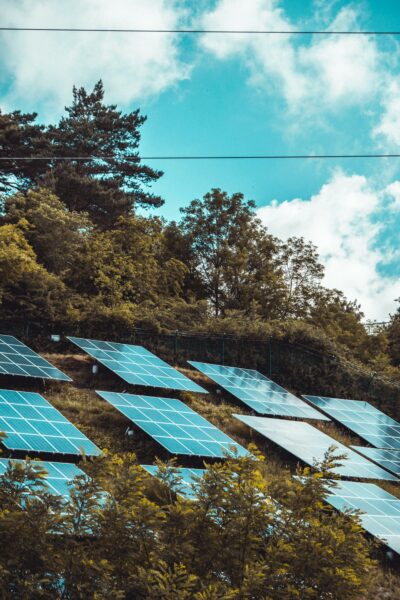
Agri-PV plants provide benefits for energy production and contribute to the protection of agricultural crops. Shading by solar panels reduces the need for water during periods of heat and protects against extreme weather.

What we want to do specifically in this area

Climate change is not waiting - neither are we! We want the measures of the KLIMA_PLANS Wiesbaden to be implemented consistently. In doing so, we will first focus on those measures that deliver the greatest CO2 savings per euro invested. In this way, urban resources are used optimally and faster progress on climate protection is achieved. Climate protection only works together! We will work to involve Wiesbaden’s civil society more closely in its implementation – from citizens’ initiatives to businesses and schools. Because only together do we create the transformation to a climate-neutral Wiesbaden. Through monitoring, the city society can understand where the state capital Wiesbaden stands and where it needs to be monitored.

We rely on real CO2 reduction through the consistent expansion of renewable energies, climate-friendly mobility and energy-efficient building renovations in our city. We reject doubtful CO2 certificates, such as those that can be purchased via gas power plants in India, as greenwashing (link).

At all levels of municipal activities, we want to advance the implementation of the 17 sustainability goals in Wiesbaden as a matter of priority. This is how we achieve social, ecological and economic improvements. To this end, an action programme with concrete responsibilities and the necessary resources is to be developed and implemented from the SDG inventory of the city administration. Among other things, systematic sustainability criteria such as life cycle costs, resource conservation and tariff compliance are to be taken into account.

The reduction of temperatures in all heat-contaminated districts is a primary goal of climate adaptation for health protection. In doing so, we want to continue to ensure less sealed surfaces and strengthen the effect of heat and heavy rain by increasing the greening of facades, roofs, squares or schoolyards. Technical solutions such as sun protection and night cooling of buildings, PV-covered parking areas and sidewalks or humidification measures are also part of the solution.

We will secure the implementation of the KLIMA_PLAN with sufficient financial resources. In doing so, we take into account the realistic costs and the savings potential, also through avoided climate follow-up costs. We want to further expand the urban funding management in order to mobilize all available federal and EU funding for Wiesbaden. This relieves the burden on the city budget and maximises our climate protection investments. We will establish a competence network for climate protection in the city administration that supports all departments in the implementation of their climate protection measures and coordinates the application for funding.

For urban society organisations - such as the Climate Protection Advisory Board with representatives from companies and associations - we want to improve the right to be heard, to propose and to speak in political bodies such as committees and local advisory boards. We want to encourage the establishment of citizen climate councils in which Wiesbadeners can develop concrete proposals for the implementation and further development of the KLIMA_PLANS.

We want to strengthen the Climate Protection Agency (CSA) as the organiser for advice on the energy and heat transition of civil society. Their personnel base must be set up accordingly and financially secured by municipal subsidies and third-party subsidies. In order to exploit synergies, we want to bundle the activities of ESWE Versorgungs, KSA and the environmental shop under one common roof, the "Haus für Umwelt und Klima" (House for Environment and Climate), and make them more visible in the city centre as a central point of contact and advice for citizens. This also creates the opportunity for other organisations close to citizens (including those from the surrounding area) to anchor environmental and climate protection in the population together and more quickly in a networked manner.

The energy and heat transition affects all citizens. We must not leave the municipal utilities and energy suppliers alone with their implementation and want to make our contribution to an ecological, safe and socially balanced heat transition. The expansion of the heating networks is the means of choice in the condensed city centre against the background of affordability and poor energy conditions in multi-storey housing construction. Decentralised low-temperature local heating systems shall also be monitored. We also want to implement the energy transition with citizen projects in the district in order to achieve 100 percent renewable heat by 2045. Guidelines for sustainable neighbourhood development with renewable energies and improved energy efficiency help. The creation and implementation of urban refurbishment with state support is a supporting instrument for this.

In order to make the climate impact of daily decisions in the city transparent and to promote climate-friendly decisions, we are committed to the introduction of a ‘climate traffic light’ for urban projects.

Each relevant measure, construction project and investment is assessed in terms of its climate impact and marked with a traffic light colour: Green for climate-positive, yellow for climate-neutral and red for climate-damaging projects. For this purpose, a concrete life-cycle carbon footprint should be created by independent experts and accessible to all citizens. With the Climate Traffic Light, we are creating a binding basis for climate-conscious decisions in our municipality. In the case of equivalent alternatives, preference should always be given to the more climate-friendly option.

What we have already achieved

The main measures in the area of climate protection and energy in the state capital were poured into a strategic concept, the KLIMA_PLAN, which includes concrete goals and measures and enables prioritization (link). The implementation of the measures is underway in many places in the city. In addition to the laying of heating and electricity lines, this includes the expansion of renewable energies, the energy-efficient renovation of buildings, the expansion of public transport, settlement development oriented towards climate protection, the construction of rain retention and infiltration facilities and much more.

With the guiding principle for sustainable construction and associated guidelines, ecology, climate protection and climate adaptation are considered from the outset in all urban construction projects. Corresponding energy-efficient building renovations and new buildings with renewable energies are already being implemented in ongoing projects – for example at the Bürgerhaus Kastel-Kostheim and in the many new construction areas of the city.

The municipal program Ökoprofit celebrated its 25th anniversary in 2025: Numerous companies and organizations have introduced the environmental and climate management system, setting the course for a resource-saving, sustainable economy. In the last parliamentary term, we tested how waste prevention and circular economy work in the field of ToGo and events with the model project Reusable and Notes for Events.

With heat planning, we have created the strategic basis for a climate-neutral energy and heat supply. By 2035, we want to more than double the share of renewable energies in the state capital, the possibilities identified in the heat potential study are enormous. A digital twin of the city allows calculations for the energy supply and heat transition.

Satisfaction has demonstrably increased due to improvements in cycling and pedestrian traffic in Wiesbaden. The federal and EU-wide requirements for health protection and the measures necessary and implemented in Wiesbaden - such as speed regulation and digital traffic control - have significantly reduced the measured noise and air pollution as well as the climate impact. The travel times in Wiesbaden have demonstrably improved in comparison. At ESWE, 121 buses are now electric. This is the largest e-bus fleet in Hesse. The projects Reactivation of the Ahrtalbahn and Wallauer Spange have been advanced. Thanks to a comprehensive electric charging concept, more than 100 public charging points are already available in Wiesbaden.

With the development of a soil management concept, the state capital Wiesbaden has created an effective instrument to protect, sustainably develop and manage land. Green areas and climate protection areas will be preserved. Optimized land use and recycling is the guarantee for the net-0 land consumption defined at federal level by 2050 at the latest. After reaching net 0, we will enter a land-use circular economy. The use of open spaces and valuable soils is reduced by a proactive, active soil policy.

Climate protection only works together. We have strengthened climate and environmental management in the administration and anchored sustainability in the city's code of participation. We will continue on this path and involve citizens even more. The climate adaptation concept for Wiesbaden will be presented at the end of 2025.